









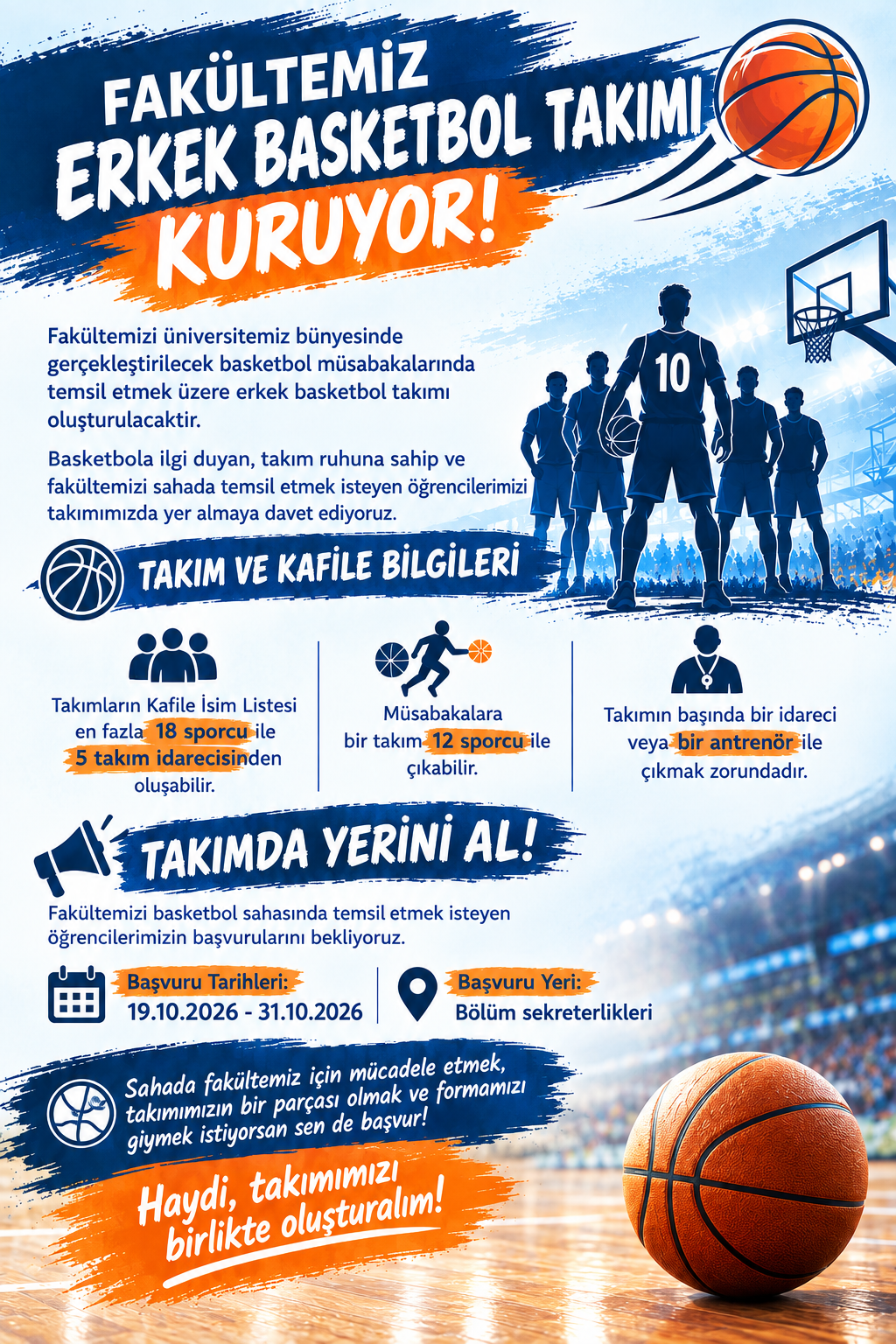
Players Wanted for Our Faculty’s Men’s Basketball Team!
10/15/2026
Last Updated At: 10/15/2026
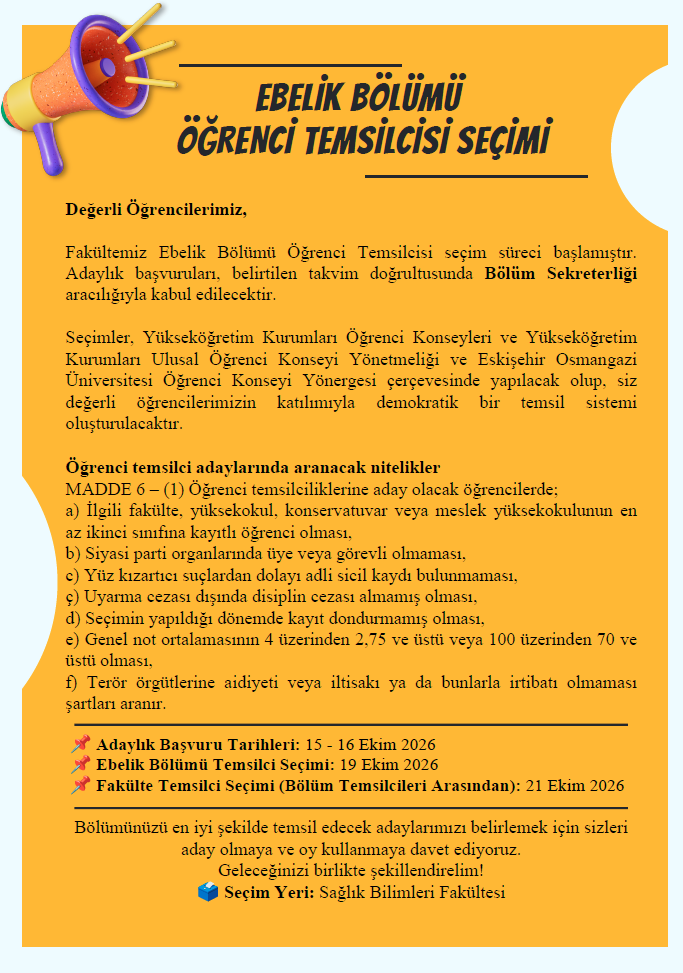
Election of Midwifery Department Student Representative
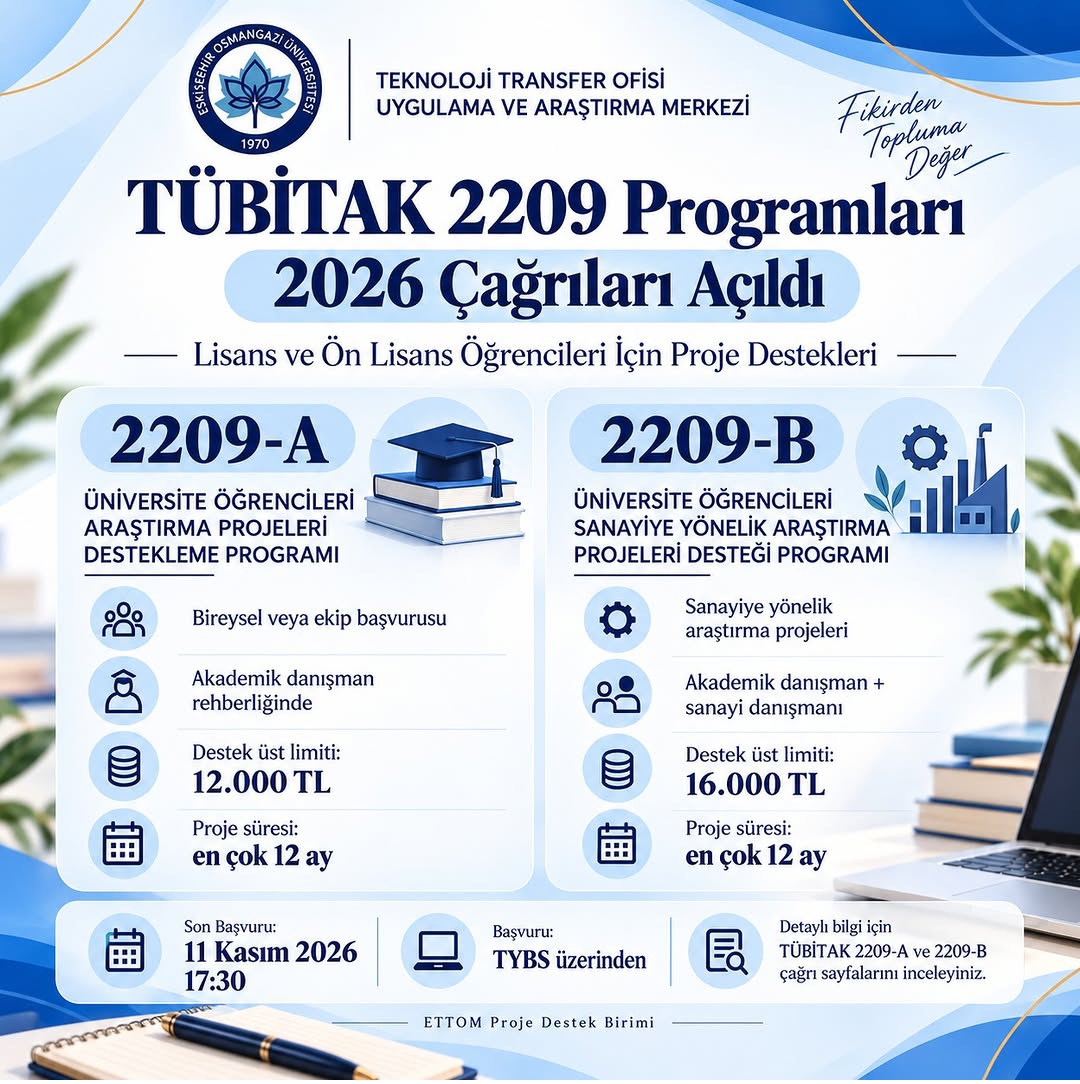
TÜBİTAK 2209-A (2026 Calls Now Open)
10/10/2026
Last Updated At: 10/10/2026
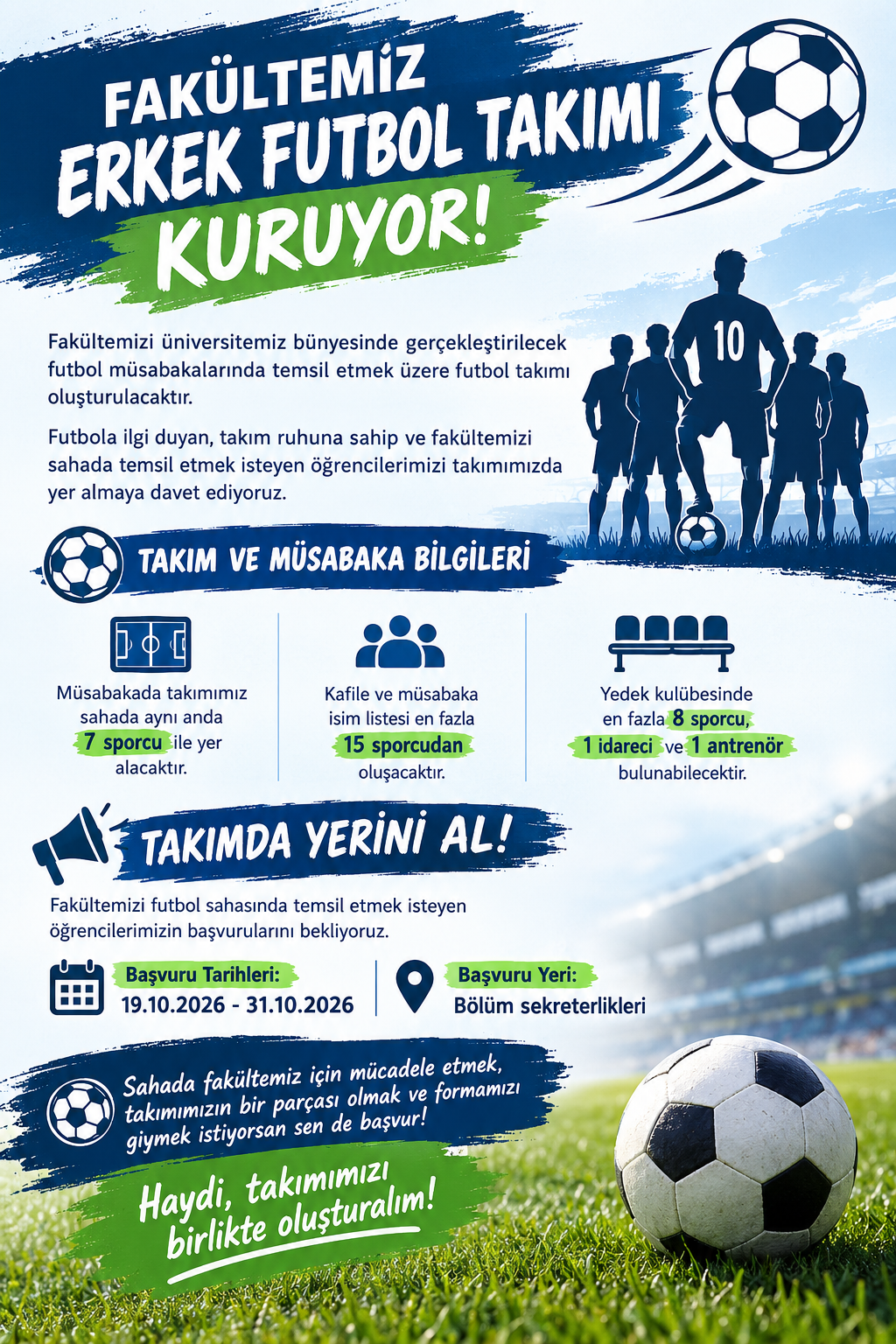
Players Wanted for Our Faculty’s Men’s Football Team!
10/6/2026
Last Updated At: 10/6/2026
Important Announcement Regarding the Occupational Health and Safety Basic Training Examination
9/21/2026
As part of the Occupational Health and Safety Basic Training provided for students of the Faculty of Health Sciences, the end-of-training examination will be available on ESUZEM starting from September 26, 2026.
The examination will remain accessible to students until 5:00 p.m. on Friday, October 2, 2026.
Important: Students who successfully pass the examination are required to download and save their Occupational Health and Safety Basic Training Certificates from ESUZEM before the system access closes. Once the access period has ended, the certificates will no longer be available for download through the system.
Students are kindly requested to take note of the examination dates and access period and, if they successfully pass the examination, make sure to download and save their certificates before the specified deadline.
Faculty of Health Sciences Deanery
Last Updated At: 9/21/2026
Regarding Student ID Cards
9/21/2026
Dear Students,
❗ Student ID cards can be collected from the Student Affairs Office of our Faculty.
It is mandatory to carry your student ID card when entering the faculty building. Entry will be allowed without it under no circumstances (e.g., losing or forgetting your card).
If you attempt to enter without your student ID:
🔹 The security officer will record the incident.
🔹 If this happens a second time, you will not be allowed to enter the building.
To avoid any inconvenience:
✅ Always carry your Student ID Card with you.
✅ If you lose your Student ID Card, apply for a replacement at the relevant office as soon as possible.
✅ If you forget your Student ID Card, plan accordingly, as you will not be permitted to enter the faculty.
Thank you for your cooperation in this matter.
Faculty of Health Sciences Deanery
Last Updated At: 9/21/2026
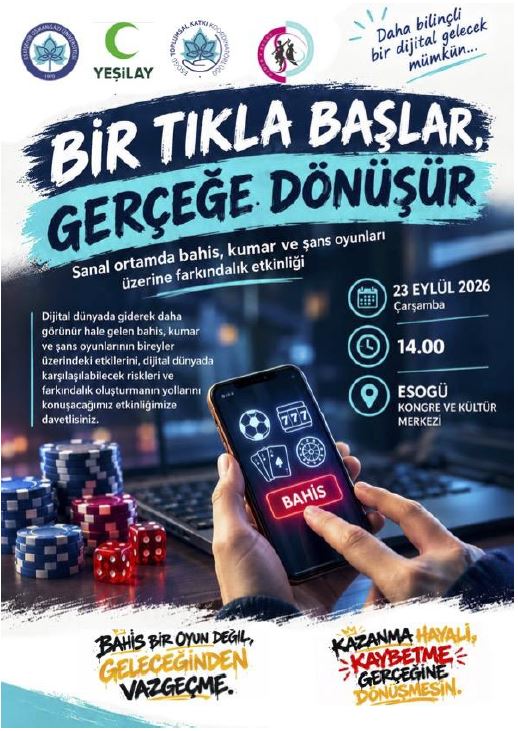
Event on Combating Online Betting, Games of Chance and Gambling
9/18/2026
An event on combating online betting, games of chance and gambling will be held in cooperation with the Community Engagement Coordination Office, Folklore Research and Application Center, and the Turkish Green Crescent (Yeşilay).
Date: September 23, 2026
Time: 2:00 p.m.
Venue: ESOGÜ Congress and Culture Center
Students, academic staff, and administrative staff are kindly encouraged to attend the event.
Last Updated At: 9/18/2026
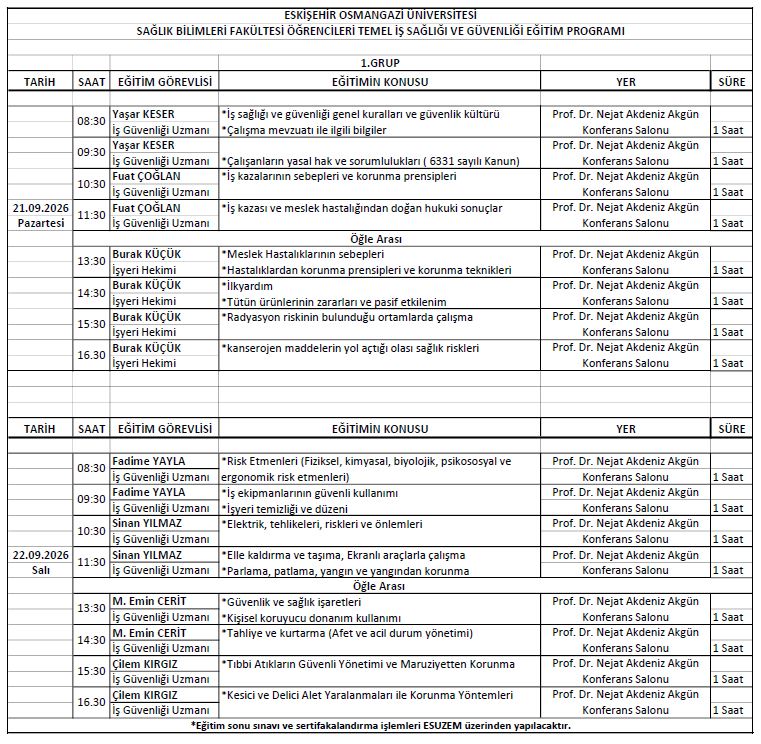
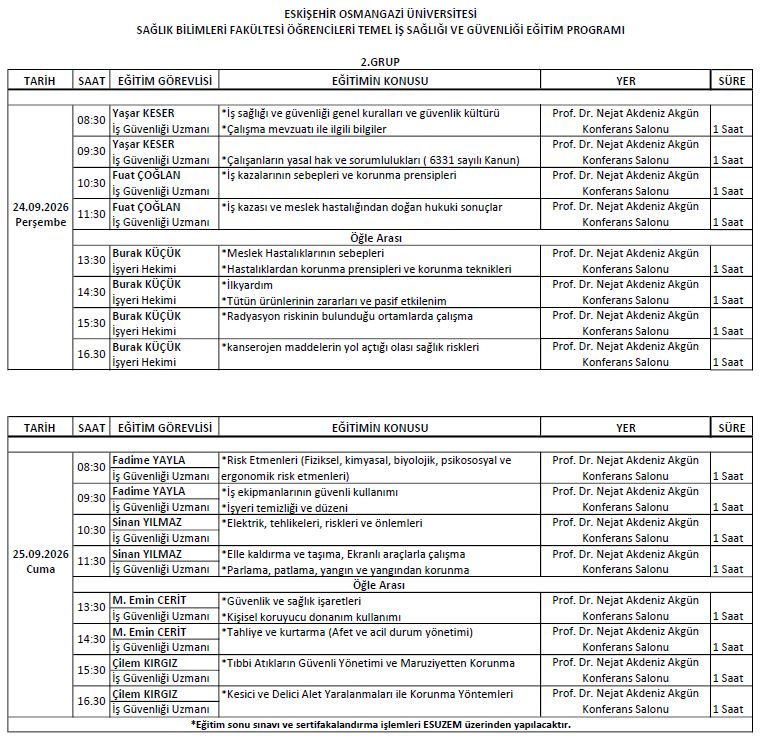
Update on Occupational Health and Safety Training Dates (Attendance is Mandatory)
9/9/2026
ATTENTION!
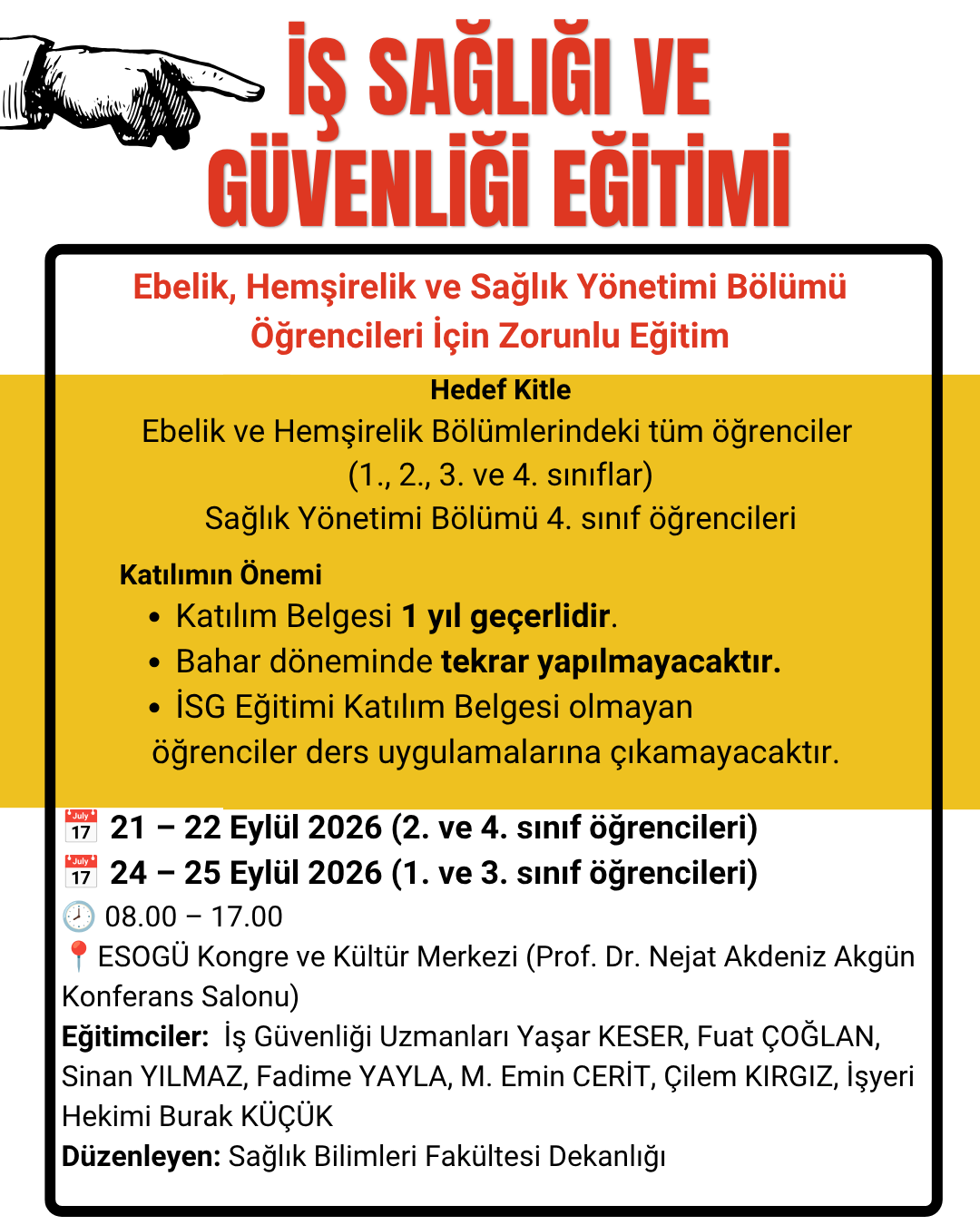
Due to the orientation programs planned for the first-year students of our Faculty on September 22, 2026, the dates of the Occupational Health and Safety training sessions have been updated.
Training Dates:
- 2nd and 4th-year students: September 21–22, 2026
- 1st and 3rd-year students: September 24–25, 2026
Last Updated At: 9/17/2026
TESYEV 2026–2027 Scholarship Announcement
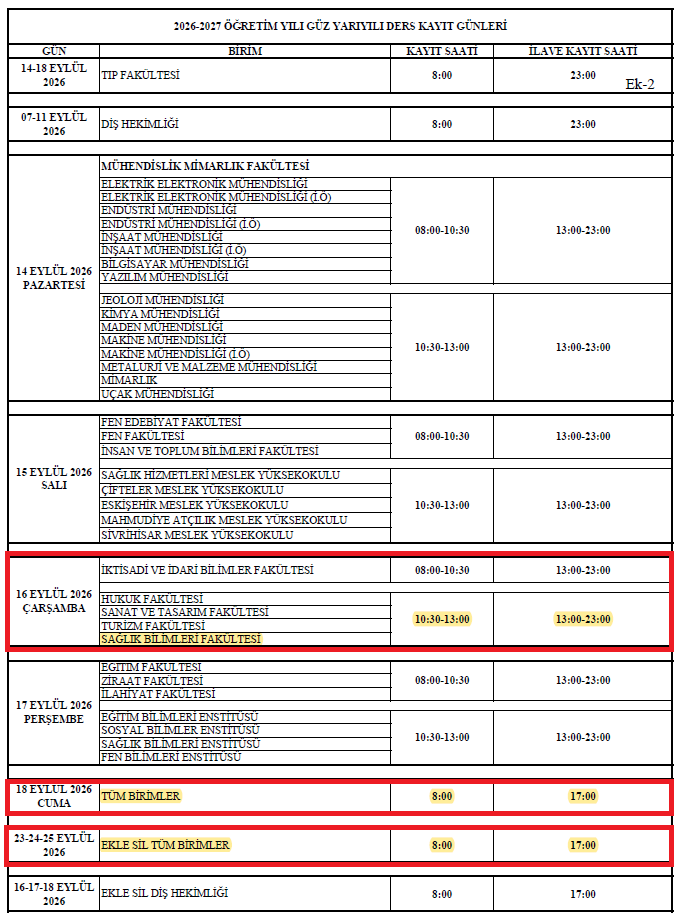
Course Registration for the Fall Semester of the 2026–2027 Academic Year
9/7/2026
Last Updated At: 9/7/2026
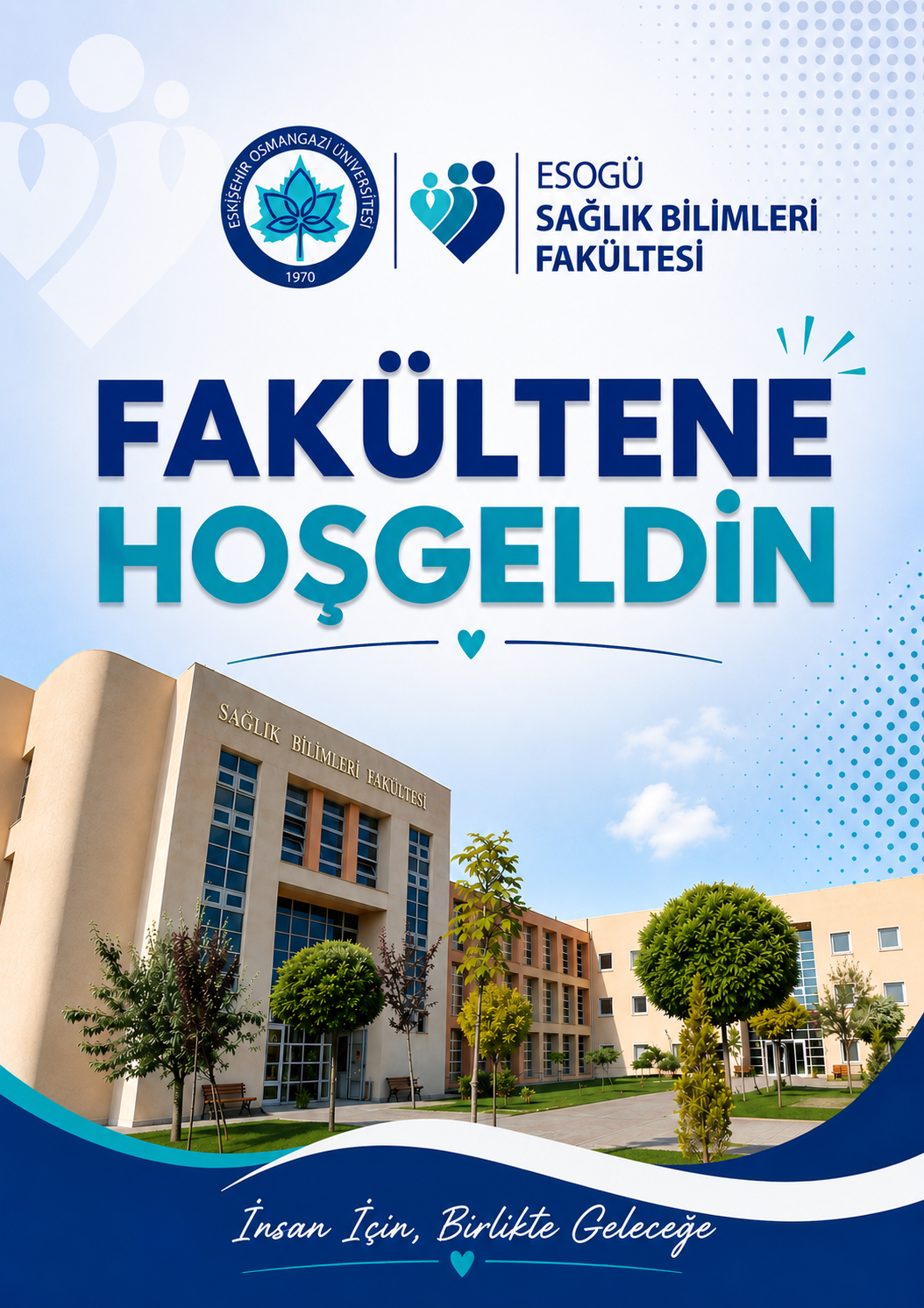
Welcome to Your Faculty!
8/20/2026
Dear Students,
We warmly congratulate you on your hard work and success as you take the first step into your university journey. Welcome to the Faculty of Health Sciences!
Our Departments of Nursing, Midwifery, and Health Management offer you an exciting university experience where you will develop your knowledge and skills, build your professional identity, gain new experiences, and prepare for your future career.
We are committed not only to helping you become qualified professionals, but also to preparing you to become individuals who make a meaningful contribution to people and society, embrace scientific thinking and ethical values, and make a difference as the healthcare professionals and leaders of the future.
As you begin this new journey, we hope that your curiosity, enthusiasm, and dreams will guide you along the way. We wish you a fulfilling university experience enriched not only by academic achievements but also by new friendships, wonderful memories, and unforgettable experiences.
Here’s to new beginnings, new achievements, and the wonderful years we will share together…
Welcome to your faculty!
We are stronger with you as part of our community. 🌿
Wishing you a successful and fulfilling university journey.
The Dean’s Office
Faculty of Health Sciences
Last Updated At: 8/20/2026
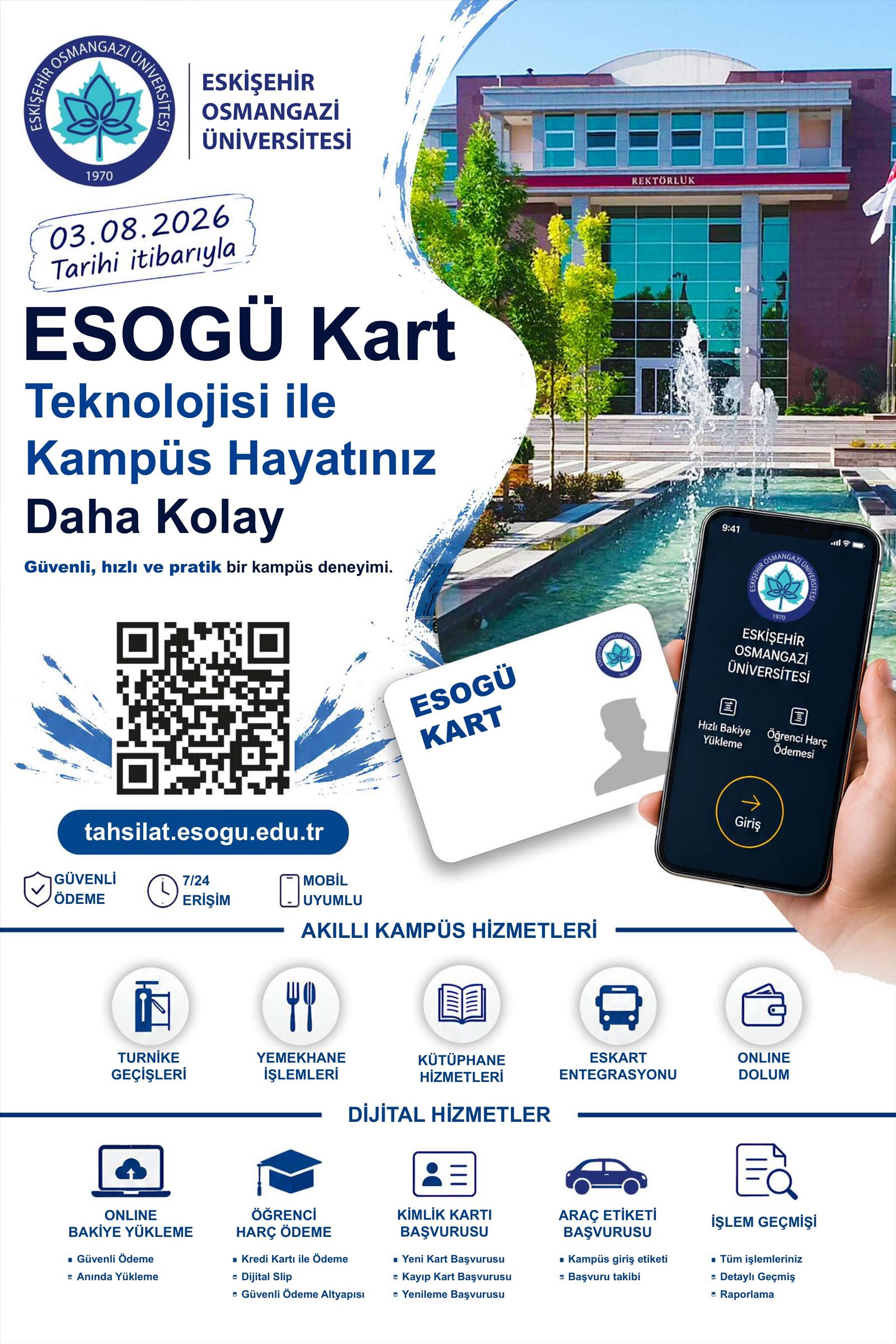
ESOGÜ Card Technology Makes Campus Life Easier
2025–2026 Academic Year Summer School and Single Course Academic Calendar
7/10/2026

Last Updated At: 7/10/2026
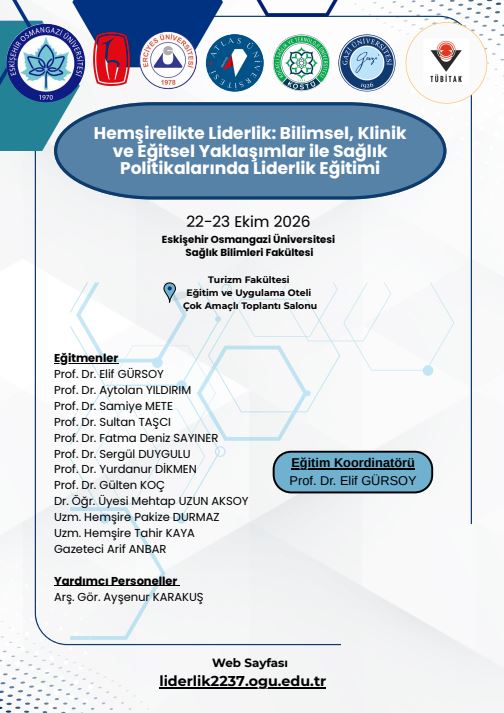
Nursing Leadership Training (TÜBİTAK 2237-A Scientific Training Event)
7/7/2026
The project entitled "Nursing Leadership: Leadership Training in Scientific, Clinical, Educational Approaches and Health Policies" will be held on 22–23 October 2026, hosted by the Faculty of Health Sciences, Eskişehir Osmangazi University, at the Multi-Purpose Conference Hall of the Eskişehir Osmangazi University Faculty of Tourism Training and Practice Hotel.
The primary aim of the program is to enhance undergraduate nursing students' leadership knowledge, skills, and awareness by supporting the development of competencies in communication, team management, problem-solving, clinical decision-making, and professional development, thereby contributing to the education of future nurse leaders. Upon completion of the training, participants are expected to be able to evaluate leadership approaches in clinical and academic settings, strengthen their communication, team management, problem-solving, and decision-making skills, contribute effectively to the planning of health policies, analyze the use of digital technologies in healthcare services, and develop an individual leadership development plan to support their professional growth.
The target audience of the event consists of undergraduate nursing students enrolled in Faculties of Nursing, Departments of Nursing within Faculties of Health Sciences, and Schools of Health Sciences at universities across Türkiye. Participation is limited to 30 students, and the training will be offered free of charge under the TÜBİTAK 2237-A Scientific Training Events Support Program. Application dates, eligibility requirements, and detailed information about the event are available on the liderlik2237.ogu.edu.tr website.
Last Updated At: 7/17/2026
2025–2026 Academic Year Spring Semester Final Examination Schedule
6/2/2026
2025–2026 Academic Year Spring Semester Final Examination Schedule – Click here.
Last Updated At: 6/3/2026
Attention for Students Applying to Pedagogical Formation Education for the First Time
8/11/2025
-
In the fall semester of the 2025–2026 academic year, only students from the Midwifery and Nursing departments will be eligible to apply for the Pedagogical Formation Education program.
-
Students who wish to start the Pedagogical Formation Education must fill out the Pedagogical Formation Addition Petition available on the Faculty website, have it approved by their Department’s Pedagogical Formation Coordinator, and submit it to the Student Affairs Unit of the Faculty of Health Sciences Dean’s Office by September 26, 2025.
-
Since the Pedagogical Formation courses will be included in the graduation curriculum, they will be counted toward the overall GPA.
Click here for the Pedagogical Formation Addition Petition.
Note: Applications submitted outside the specified dates will not be accepted.
Dean’s Office, Faculty of Health Sciences
Last Updated At: 8/26/2025